


[av_one_full first min_height=” vertical_alignment=” space=” custom_margin=” margin=’0px’ row_boxshadow=” row_boxshadow_color=” row_boxshadow_width=’10’ link=” linktarget=” link_hover=” title_attr=” alt_attr=” padding=’0px’ highlight=” highlight_size=” border=” border_color=” radius=’0px’ column_boxshadow=” column_boxshadow_color=” column_boxshadow_width=’10’ background=’bg_color’ background_color=” background_gradient_color1=” background_gradient_color2=” background_gradient_direction=’vertical’ src=” background_position=’top left’ background_repeat=’no-repeat’ animation=” mobile_breaking=” mobile_display=” av_uid=’av-1qz7v’]
[av_heading heading=’Cómo construir una marca sólida en medios digitales’ tag=’h2′ link_apply=” link=’manually,http://’ link_target=” style=’blockquote modern-quote’ size=” subheading_active=” subheading_size=’15’ margin=” margin_sync=’true’ padding=’10’ color=” custom_font=” av-medium-font-size-title=” av-small-font-size-title=” av-mini-font-size-title=” av-medium-font-size=” av-small-font-size=” av-mini-font-size=” av_uid=’av-k0o5qzu3′ custom_class=” admin_preview_bg=”][/av_heading]
[/av_one_full]
[av_one_full first min_height=” vertical_alignment=” space=” custom_margin=” margin=’0px’ row_boxshadow=” row_boxshadow_color=” row_boxshadow_width=’10’ link=” linktarget=” link_hover=” title_attr=” alt_attr=” padding=’0px’ highlight=” highlight_size=” border=” border_color=” radius=’0px’ column_boxshadow=” column_boxshadow_color=” column_boxshadow_width=’10’ background=’bg_color’ background_color=” background_gradient_color1=” background_gradient_color2=” background_gradient_direction=’vertical’ src=” background_position=’top left’ background_repeat=’no-repeat’ animation=” mobile_breaking=” mobile_display=” av_uid=’av-1qz7v’]
[av_textblock size=” font_color=” color=” av-medium-font-size=” av-small-font-size=” av-mini-font-size=” av_uid=’av-72yhf’ custom_class=” admin_preview_bg=”]
Modern marketing consists of harmonizing two primary business objectives: selling or generating demand and building strong brands over the long term.
I want to use this space to present a personal model that I developed and am currently testing. It consists of transferring traditional brand-building marketing strategies into the digital environment.
Based on author David Aaker’s theoretical framework, “Brand Equity,” or brand value, consists of five elements that help ensure a brand is moving in the right direction:
-Brand Recall: Ensure that the target audience remembers the brand.
-Loyalty: Encourage repeat purchases or other indicators of loyalty.
-Perceived Quality: Perception of high quality, supported by the product’s or service’s actual quality.
-Environmental Awareness or Humanitarian Awareness: It is important for a brand to give back part of its profits to humanity and/or the environment.
-Financial Value: The brand’s ability to generate value for a business.
As the table below shows, digital media makes a significant contribution to building brand equity through its alignment with the five factors mentioned above, which I explain below:
-Brand Recall = Digital Footprint
Brand awareness in an offline or non-digital context is typically built through advertising and product-related variables such as packaging and distribution. In the digital context, this translates into what I call a “Digital Footprint”: the visible imprint or volume of content that appears in a general search for that brand
-Loyalty = Interactions
In the offline world, loyalty is measured through repeat purchases and, in some cases, market research. In the digital environment, this can be replaced by the interactions or “engagement” generated on the brand’s social networks
-Perceived Quality = Sentiment Analysis
What is evaluated in the offline world through satisfaction panels or market research can be complemented digitally through what is known as “sentiment analysis.” This information is generated using social-listening or social-media-monitoring tools whose algorithms can identify positive, negative, or neutral consumer statements about a brand or company. This makes it possible to establish the corresponding digital equivalent.
-Environmental Awareness or Humanitarian Awareness = Interactions / Net Promoter Score
Acceptance of a brand and its philosophy or story can be associated with its humanitarian awareness through the stories the brand tells on its digital channels. Storytelling provides a way to connect brands with real initiatives that support people or the environment.
-Financial Value = Conversion and ROI
Finally, we must remember that brands exist to make money and generate value. Although this section could fall under the demand-generation objective, it is important to document the financial value of a digital business from the perspective of the potential value the brand can generate through these channels.
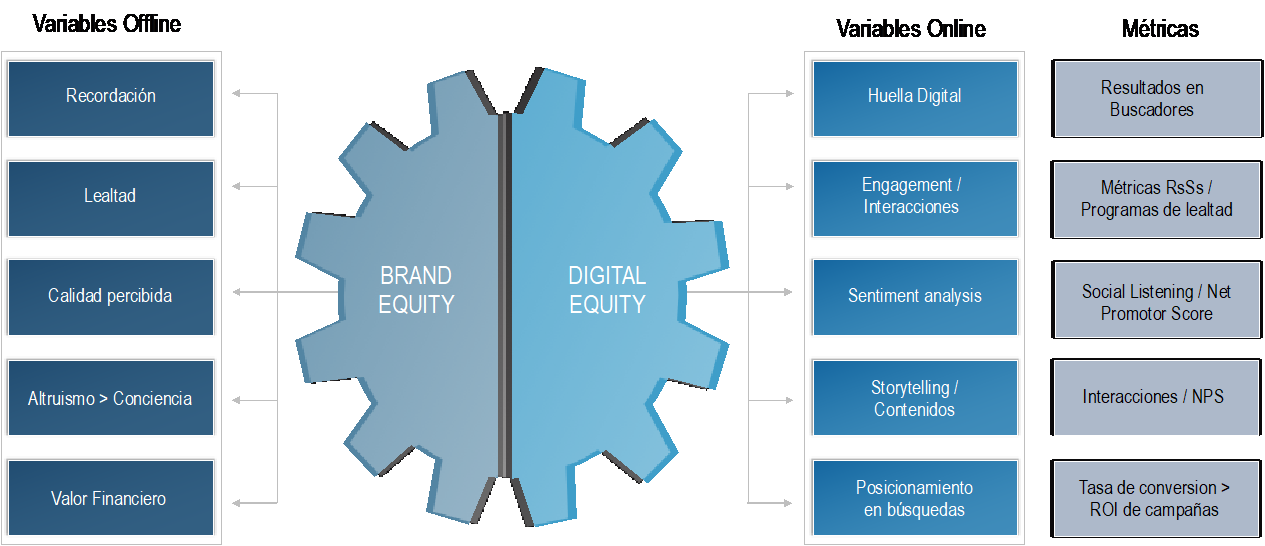
In summary, although this remains experimental, a digital strategy must consider these elements to truly fulfill the mission of building valuable brands.
Source: merca20.com/como-construir-una-marca-solida-en-medios-digitales
[/av_textblock]
[/av_one_full]