

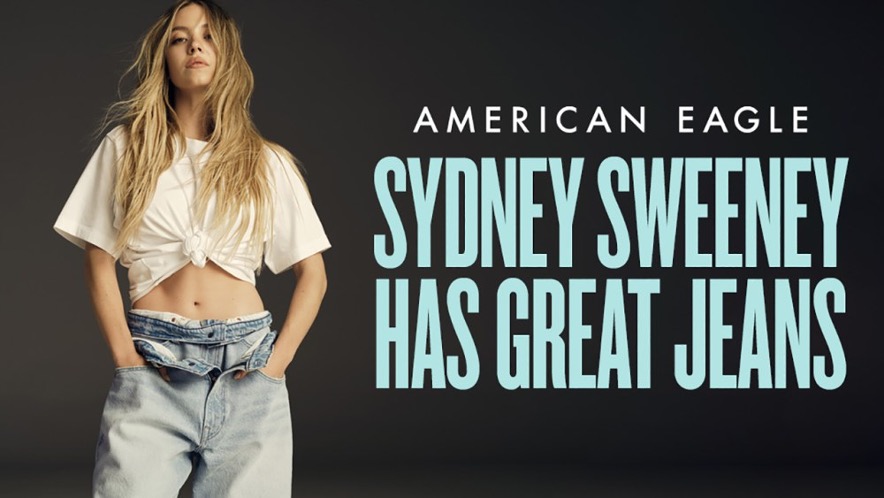
Performance marketing has evolved dramatically. It is no longer only about CTR and conversions—CMOs now calculate how much controversy they can monetize without damaging their brand equity. American Eagle’s Sydney Sweeney campaign is the perfect case for analyzing this new digital-marketing reality.
The Calculated-Risk Game
The “Sydney Sweeney has great jeans/genes” campaign was not a creative accident. In my experience, I have seen brands pivot away from “safe marketing” toward what I call “controversy-driven engagement.” American Eagle knew exactly what it was doing with that deliberate wordplay.
The timing was impeccable: launching amid a polarized political climate in the United States, using an actress who already generates organic conversation and wordplay guaranteed to produce multiple interpretations. This is not accidental marketing; it is viral engineering.
The Numbers Redefining ROI
The KPIs speak for themselves: a 15% increase in share value—adding $310 million in market capitalization—in one week. To put this into perspective, traditional digital campaigns struggle to generate a 2%–3% brand lift despite million-dollar budgets.
What is fascinating is that American Eagle achieved this without investing heavily in mass paid media. The earned media generated by the controversy surpassed anything traditional media buying could have achieved. We are talking about coverage on CNN, NBC, and international media, along with an organic conversation that even reached political figures such as JD Vance.
The New Customer Journey of Disruptive Marketing
The traditional funnel—awareness → consideration → purchase—is evolving into something more complex and powerful:
Controversy → Viral Discussion → Brand Recall → Curiosity-Driven Traffic → Conversion
This new journey leverages a key psychological principle: people investigate what makes them uncomfortable. Users who initially criticized the campaign eventually visited the American Eagle website to “confirm” their outrage. That qualified traffic is pure gold for any e-commerce business.
The Evolution of Social Listening
For digital strategists, this case represents a revolution in our metrics. Traditional sentiment analysis would classify this campaign as “negative,” but the business results tell a different story.
We Need New Measurement Frameworks:
- Polarized Engagement: Negative comments that generate shares and replies
- Cross-Channel Amplification: When the controversy moves from social media to traditional media
- Cultural Penetration: Measuring mentions in non-commercial contexts
Crisis Management as Strategic Amplification
American Eagle made a bold decision: it initially remained silent and later responded with a minimalist statement—“it was always about the jeans.” This “controlled silence” strategy allowed the controversy to feed itself before the company intervened.
At Geifman Consulting, we are developing what we call “brand courage frameworks”—methodologies for calculating how much reputational risk a brand can absorb based on its current equity and growth objectives.
The Future of Digital Marketing: Polarization Marketing?
When the vice president of the United States comments on your jeans campaign, you have achieved something no amount of programmatic buying can purchase: genuine cultural penetration. The strategic question is: Are we entering an era in which effective marketing requires taking positions that divide audiences?
Early adopters are already experimenting. Brands such as Nike with Colin Kaepernick, Gillette with toxic masculinity, and now American Eagle with this wordplay are demonstrating that neutrality can be the enemy of growth.
The Lesson for Digital Strategists
This Case Redefines Several Assumptions:
- Brand Safety does not mean avoiding all controversy—it means knowing which controversies are strategically profitable.
- Negative Engagement when executed well, can be more valuable than lukewarm positive engagement
- Algorithms amplify polarization—we can use this to our advantage
The question is not whether American Eagle took too much of a risk, but whether other brands are playing it too safe in a digital ecosystem that rewards boldness.